Arts Review
QSO Favourites
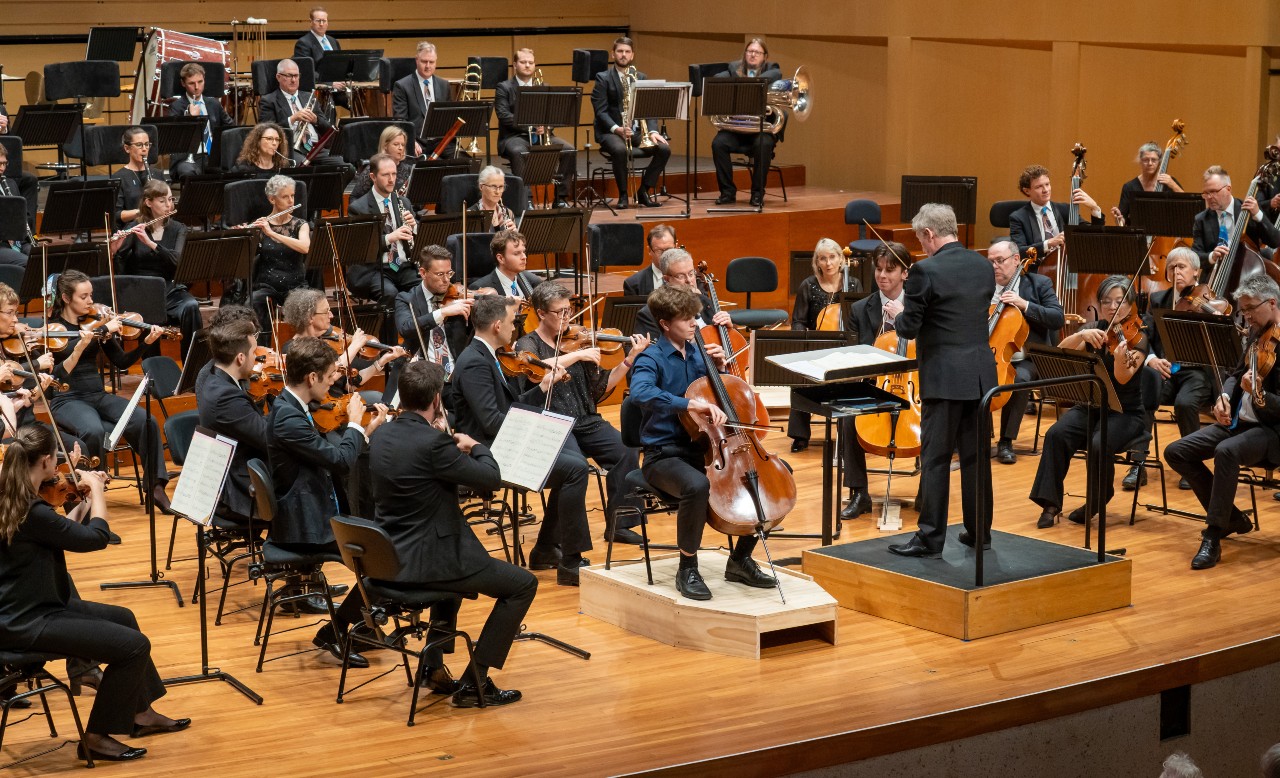
Concert Hall, QPAC
Saturday 7 February 2026 7:30pm
The evening at QPAC’s Concert Hall unfolded with a curious mix of restraint and brilliance, a program that at times felt hesitant to stretch its wings yet still managed to deliver moments of genuine uplift. Douglas Boyd’s presence on the podium was steady but understated; his sparse commentary left much of the evening’s personality in the hands of host Ed Le Brocq, whose insights provided welcome colour between works. Even so, the opening pairing of The Dam Busters March and the first movement of Beethoven’s Symphony No. 6 didn’t quite ignite the spark one hopes for at the start of a new season. Their similar tonal palettes blurred together, making it difficult to feel a clear shift in mood or momentum.
Tchaikovsky’s Waltz of the Flowers from The Nutcracker Suite No. 1 offered a familiar anchor point - perhaps too familiar. Brisbane audiences know this piece intimately thanks to Queensland Ballet’s annual festive staging, and while it is undeniably beautiful, its inclusion contributed to a sense that the repertoire was playing things safe. For a season opener, the programming felt cautious, leaning heavily on well‑worn favourites rather than venturing into more adventurous territory.
The interval provided a moment to reflect on the pacing of the night. With such recognisable works dominating the first half, one couldn’t help but wonder what a more condensed, “greatest hits through the ages” approach might have felt like - something tighter, more curated, more daring.
The turning point arrived with the appearance of the Young Instrumentalist Prize winner, whose performance of the fourth movement of a cello concerto injected the room with a surge of energy. Their presence alone was a reminder of what dedication and ambition can produce, and the performance itself was a highlight - technically assured, emotionally open, and deeply inspiring for any young musician in the audience imagining their own path forward.
From there, the program finally stepped into contemporary resonance with Uplift, a work that captured the collective memory of the COVID‑19 lockdowns. Its emotional arc - weight, confinement, release - felt instantly relatable. The orchestra embraced the piece with a sense of renewed purpose, and the audience responded in kind. It was the first moment of the night where the repertoire felt truly connected to the present rather than the past.
Elgar’s Enigma Variations closed the evening with grandeur, though the balance between organ and orchestra occasionally blurred to the point of indistinction. Whether intentional or not, the effect was sometimes overwhelming, yet the piece still served as a satisfying finale. As the final notes faded, the familiar post‑concert buzz settled over the hall - the collective shuffle toward cabs, rideshares, and the slow crawl out of the QPAC car park.
While the program may not have taken many risks, the night offered enough moments of beauty, talent, and emotional resonance to remind audiences why live orchestral music continues to matter.
Words: Joanna Letic
Imagery: Stephen Henry