Arts Review
Drowning Ophelia
Chelmer Community Theatre
11th July-2nd August 2026
Dr Gemma Regan
Inciteful drama with a twist of Shakespeare
Director Rhyll Bucknell is never one to shy away from a confronting plot, seeking out lesser-known plays that showcase strong female roles, as with her excellent 2023 CTG production of Killing Katie: Confessions of a Book Club and the chilling Veronica’s Room in 2025. Drowning Ophelia is no exception, with a poignant examination of a woman’s psychological challenges caused by trauma at a young age.
Rachel Luann Strayer’s dark drama premiered in San Francisco in 2013, quickly gaining momentum around the world and most recently performed in Serbia, finally making its way to Australia. The play’s uniqueness is the inclusion of the tragic drowned Ophelia character from Shakespeare’s Hamlet, who lives in Jane’s bath, often singing or driving her to despair with her constant chatter.
Some productions have included comedy, whereas Bucknell has instead utilised four young dynamic actors, all new to the Centenary Theatre Group, to bring a light and fresh interpretation to a text laden with darkness.
Madelaine Harte is Jane, a troubled young adult who has few friends and a strained relationship with her brother, preferring to hide with Ophelia at home rather than socialise. Harte does well to master the character, which, as the play progresses, reveals the cause of her melancholy and unusual behaviour.
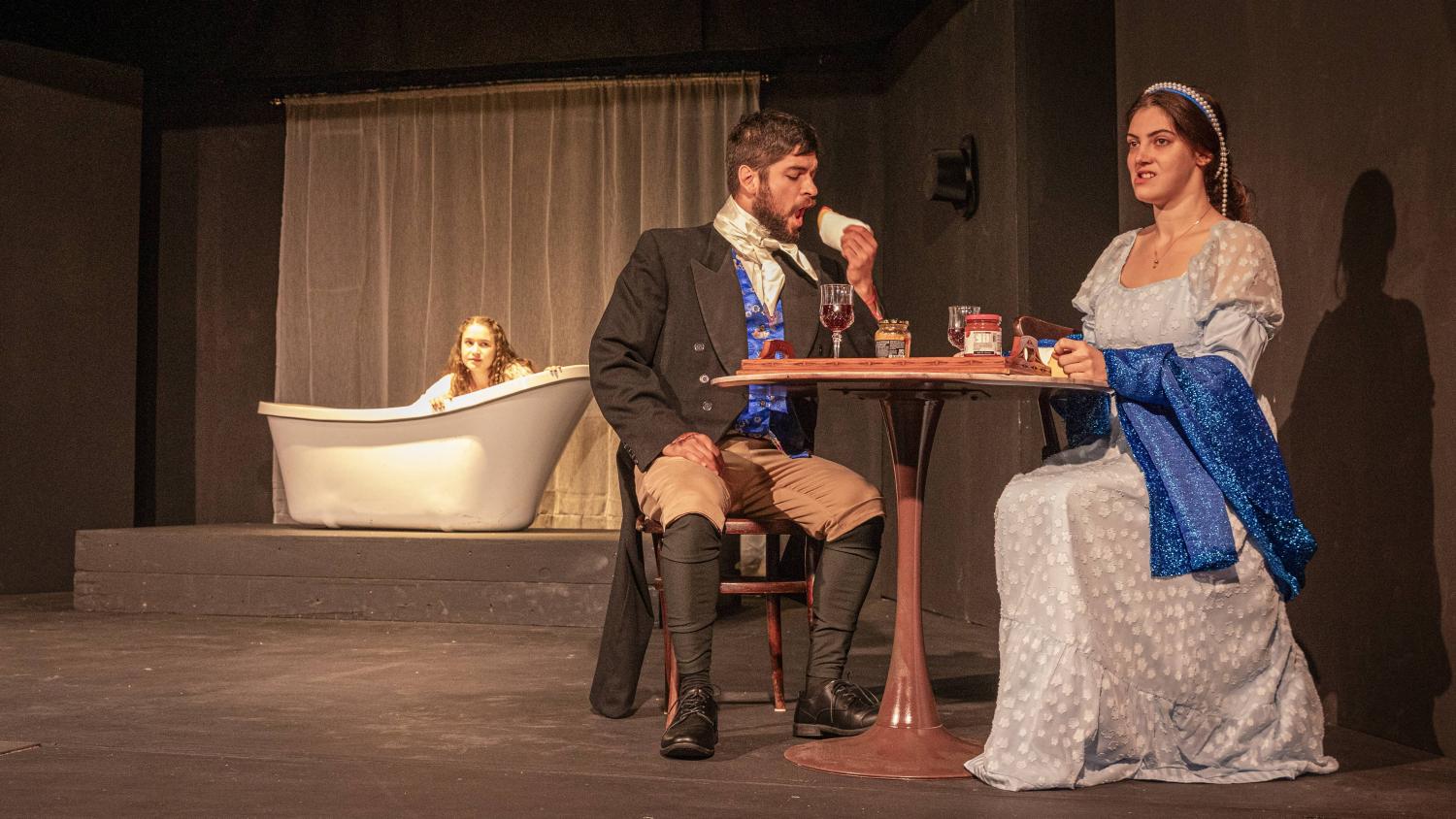
The 12-year-old Ophelia, played skilfully by an older Caitlin Swan, languishes in a slipper bath at the back of the stage, often interjecting as the story unfolds, much to the annoyance of Jane. Both Swan and Harte have delightful voices, an essential skill for the roles as mournful songs feature throughout. The synergy between the two actresses, though often in conflict, helps to convey a tender camaraderie, which is revealed in the last few scenes.
The two male roles revolve around Jane. Timothy de Vroome convincingly plays the difficult role of her brother Adam, who mostly converses through voice messages bringing an disquieting awkwardness to their relationship. The evolving character seems genuinely concerned about his lonely sister during their uneasy phone conversations. The play goes forward and backwards through time, purposefully confusing their relationship before and after he leaves home.
Federico Navarro’s character Edmund seems incidental and may have originally been a vehicle for humour, as he dresses as different characters enabling Jane to live out her historical fantasies over weekly dinners. Who he actually is is confusing, as there is no other context for their relationship.
The set is very simple with only the bath, a table and chairs and a chest of clothes on a black stage. Its simplicity helps create the fantasy within Jane’s life, importantly giving a lack of context for the bath’s location in the main living area. Little touches show how much thought has gone into a simple set. The water in the bath, which Ophelia often plays with, sometimes showering Jane and her guests, is cleverly placed so that Ophelia’s diaphanous white dress is dry when she steps out.
The plot is intentionally confusing, helping to generate an uneasiness that all is not as it should be. The simplicity of the titles for each scene, such as Then and Before Then are effectively projected behind the bath, helping change the pace between each scene and allowing the audience time to cogitate and reflect on the significance of the dialogue.
Bucknell describes the dark themes in Drowning Ophelia as “universal, important and topical,” resulting in a tender and thought-provoking production using an excellent and promising young cast. The topics of mental health may be triggering, but in the words of Hamlet "There is nothing either good or bad, but thinking makes it so”.
Drowning Ophelia is a moving and disquieting play which challenges your paradigms of mental health by cleverly including one of Shakespeare’s most-beloved tragic female characters. Despite the dark themes, this production shouldn’t be missed, as eventually “All’s Well That Ends Well!”
Imagery: Julie Collins